Why People's True Nature Never Changes
This page was translated from the Japanese original by AI.
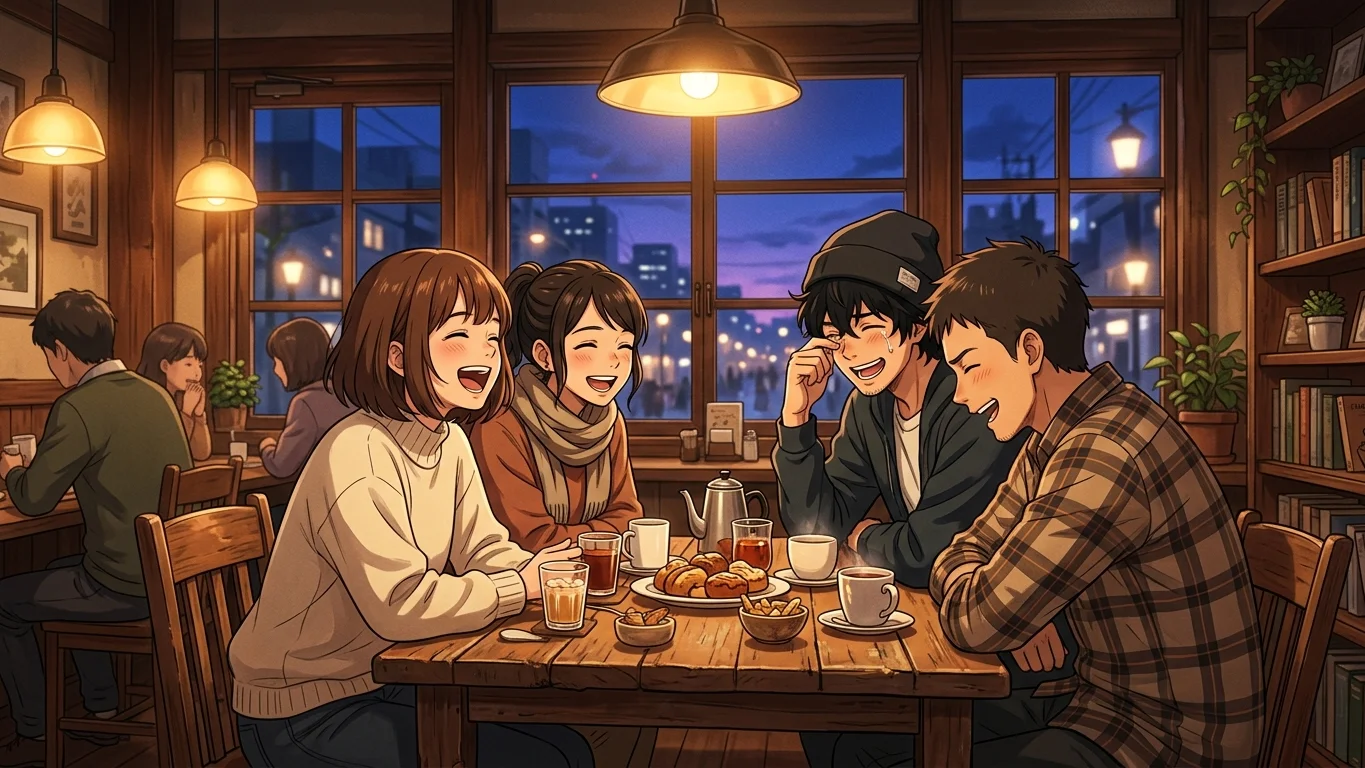
Read the original (Japanese) →Yesterday, I had the chance to catch up with friends from my college days. It had been a year for some, two years for others, and even three years for a few, but the moment we saw each other, the old college atmosphere rushed right back, and we talked for hours, completely losing track of time.
We've all entered the workforce, our careers and living environments have changed, and we've each racked up all sorts of new challenges and life experiences. And yet, almost magically, each person's aura and the core of their personality remained exactly as they always were.
People often say that experience changes us. So why does our "true nature" remain so stubbornly untouched? Curious, I looked into what neuroscience and psychology have to say about this, and I stumbled upon some fascinating facts and a deeply satisfying answer.
For anyone who navigates the everyday friction of adult relationships, here is an accessible breakdown of why people's fundamental nature doesn't change and why we can slip right back into the past in an instant with old friends.
1. The Brain's "Base Architecture (Hardware)" Barely Changes in Adulthood
Much of what we call "personality" or "true nature" is actually rooted in the physical architecture of the brain. To use a computer or smartphone analogy, the brain's structure is the "hardware (the physical components and electronic circuitry)."
According to recent research, the brain's fundamental wiring and mechanisms take shape from childhood through our twenties, and once we reach adulthood, they become largely locked in and fixed.
Let's examine four key aspects to see what gets locked in:
① The Sensory Checkpoint (Thalamic Filter)
- This is the "checkpoint" that screens sensory stimuli—sounds, lights, and physical sensations entering through the eyes, ears, and skin—deciding whether to pass them on to the brain or block them out.
- High-sensitivity types: Like high-performance microphones, they pick up distant whispers, the hum of the air conditioner, and even the sigh of someone nearby. Even when telling themselves "just ignore it," their ears pick it up anyway, making crowded places and loud environments exhausting.
- Low-sensitivity types: Their brains automatically apply active noise canceling to any background chatter unrelated to what they care about. They can immerse themselves in studying or working in a bustling café or family restaurant without breaking a sweat.
- Formative period: Ages 0–3 (Heritability: ~50–60%)
- The baseline is established in early childhood before conscious memory fully forms, and genetics accounts for more than half of the variation.
② The Threat Alarm (Amygdala Alarm)
- The part of the brain that triggers an instant "danger alert" when facing unfamiliar trouble, pressure, or interpersonal friction.
- Sensitive types: The faintest noise blares an alarm: "Could that be an intruder?!" A sudden work request or unexpected snag sends a jolt of intense tension and anxiety coursing through them within fractions of a second: "What do I do? If I mess up, I'm doomed."
- Insensitive types: The alarm doesn't go off unless a window literally shatters. When problems arise, their heart rate hardly budges: "Eh, it'll work out somehow." They stay unfazed.
- Formative period: Ages 5–7 (Heritability: ~40–50%)
- Right around the time kids enter elementary school, the sensitivity of this alarm is already largely set.
③ Motivational Fuel (The Reward System)
- The mechanism that dictates what brings pleasure and what serves as fuel (gasoline) to drive action.
- Novelty-seeking type (Premium Gas): Their motivational fire burns brightest when encountering new knowledge, untried challenges, or unfamiliar places. Conversely, when subjected to repetitive tasks or changeless routines, their tank runs dry and boredom becomes unbearable.
- Stability & Order type (Steady Electric Grid): They feel most at peace with an organized room, a set routine, and a predictable schedule. Being thrown into sudden schedule changes or chaotic settings causes severe stress.
- Formative period: Late teens to around age 20 (Heritability: ~50–60%)
- Between middle/high school and the college years, the bedrock of "what gets me excited" solidifies.
④ Information Expressways (Neural Wiring)
- The thick neural pathways connecting different regions of the brain (the frontal lobe responsible for reason, emotional centers, sensory areas, etc.).
- Thick logic wiring: When an issue arises, information rushes down the logic expressway before emotion even kicks in: "What caused this? What system can we build to prevent it from recurring?"
- Thick empathy wiring: When an issue arises, information heads straight down the emotion and empathy expressway: "How must the other person be feeling right now? Is the vibe awkward?"
- Formative period: Ages 25–30 (Heritability: ~60–80%)
- By our late twenties, the brain's major wiring projects are complete, and our habitual patterns of processing the world become permanently entrenched.
In this way, our sensory thresholds, vulnerability to anxiety, sources of motivation, and thinking habits—our very "core"—become firmly set as brain hardware by the end of our twenties. From a neuroscience standpoint, the idea that "a person's fundamental nature rarely changes" is an undeniable reality.
2. But Adults Can Change Their "Behavior"
Does that mean people can never change at all? Of course not. As we grow into adulthood, we learn to behave calmly without acting on raw emotion.
That is thanks to the development of the brain's command center: the prefrontal cortex. In computer terms, the prefrontal cortex functions as an advanced OS and software apps.
- Because an infant's prefrontal cortex is still undeveloped, when they are hungry or uncomfortable, crying is their only option.
- Adults, on the other hand, can utilize the prefrontal cortex to control their feelings and actions when something unpleasant happens, telling themselves, "Let's endure this for now," or "Let's talk through this calmly."
Regardless of our innate brain hardware, adults can use the power of the prefrontal cortex to rationally overwrite impulses and behave in ways adapted to society.
However, Rational Self-Control Is "Terribly Inefficient with Fuel"
There is a crucial catch here. Acting against your brain's innate temperament consumes massive amounts of mental energy (i.e., it gets terrible gas mileage).
For example:
- A stability-oriented person who thrives on routine feels intense exhaustion when told to launch a new venture from scratch.
- A sound-sensitive person trying desperately to focus on a conversation in a noisy pub will be drained by the end of it.
And what happens when the brain runs out of gas? When you're exhausted, sleep-deprived, or when you've been drinking.
When the prefrontal cortex—the rational brake—weakens, the mask slips, and the underlying brain hardware (the raw, unfiltered nature) emerges. The common saying that "alcohol reveals someone's true colors" is a direct reflection of how the brain works.
3. Why Can We Instantly Slip Back in Time with Old Friends?
This brings me to the core observation I wanted to share.
As adults, we run our prefrontal cortex at full throttle to get along with difficult people and play roles tailored to whatever situation we find ourselves in. We essentially spend our days wearing "fuel-draining adult suits."
So what about friends from our school days (old friends)?
Back in middle school, high school, or college, our prefrontal cortex was not yet fully mature. In other words, we had not yet mastered the art of smoothly donning masks, putting up a front, and blending in like adults do.
Friends made naturally during that unpolished era weren't relationships built on calculated reason. Rather, they were people whose raw brain hardware (unvarnished temperament) happened to click seamlessly with our own.
That is why, no matter how many years have passed, this happens when we reunite:
- There is no need to put on that draining "adult suit."
- We can power down the prefrontal cortex and speak as our authentic selves from the start.
- Because our brain hardware was tuned to the same wavelength from the beginning, being together is effortless and consumes virtually no energy.
As a result, even if you haven't seen each other in three years, you can laugh together in the exact same vibe as back then, as though you had just hung out yesterday.
4. In Conclusion: The Real Reason School Friends Are Called a "Lifelong Treasure"
People often say that friends made in your school days are treasures for life. Far from being sentimental fluff, this holds true even when viewed through the lens of brain development.
- Relationships formed in adulthood: Because our prefrontal cortex is fully developed, we can maintain mature relationships with anyone, but an inevitable filter of rationality sits between us.
- Relationships from our school days: Connections forged when our brain hardware was exposed, where raw temperaments naturally attracted each other.
As the years roll by, our circumstances, values, and social standings change. Yet the core of who we are—rooted deep within our brains—does not change. Nor does the presence of old friends who accepted that core.
If you ever feel drained from constantly playing the "adult" in your work and everyday life, why not reach out to an old friend?
In a heartbeat, you'll be transported right back to who you were back then, and your emotional gas tank will be filled right back up.
If you enjoyed this, let me know with a like.
Related reading
 articles
Using AI Changes the World